Showing posts with label racism. Show all posts

Wednesday, September 23, 2020

The Racial Divide

I've been spending a lot of time this summer thinking about how to have conversations with other white folks about systemic racism. Increasingly it seems people either get it, or think it's a non-issue.

I recently spent an entire day getting tests done in a hospital. Knowing that there'd be some wait time I brought a book with me: David Blight's 2018 biography, Frederick Douglass: Prophet of Freedom. In the course of the day two different health care practitioners (both white women under 40) noticed the book and asked about it.

One was impressed that I was trying to educate myself about the impact of white privilege, and the pain of how the federal government turned its back on the promise of Lincoln's 1863 Emancipation Proclamation in the decades that followed the Civil War—allowing white supremacy to reassert itself during Reconstruction. We had a solid connection about the need of whites to educate themselves about the dimensions of systemic racism.

The second conversation went differently. When I offered a sketch of the horrific injustices that occurred regularly in the South that was the primary focus of Douglass' orations during his final two decades, this person opined, "Well, life was probably hard for everyone after the war"—as if the hardscrabble conditions that Southern whites faced at the end of the 19th Century somehow excused or justified the lynchings, voter intimation, and unequal access to property and wages that characterized Black lives. (Was she serious? Did she really think that?)

When I persisted, making clear that I thought the reality for whites, however poor, was nowhere near as desperate or unsafe as what Blacks experienced, she backed down. While this exchange was brief, and ended without rancor or harsh words, neither did I think I'd altered her perspective, and I've been brooding about that ever since.

What might I have done differently that may have led this second person to reconsider the story she tells herself about systemic racism? I'm not sure. While I'm glad I didn't just let the moment slide by (as I might have six months ago), I also feel I need a more effective response in such moments—which will undoubtedly keep occurring.

There is a great deal for us whites to do to dismantle systemic racism, and it starts with acknowledging its existence. While I'm clear about that, and the work I need to do, I'm not clear about the best strategy for penetrating white defensiveness—which is incredibly strong in many pockets. I doubt I'll succeed by getting righteous and pounding on the gates.

One Piece of the Puzzle

Just last week I read JD Vance's bestselling memoir, Hillbilly Elegy, chronicling the lives and culture of three generations of Appalachian whites, which goes a long way to explaining why poor whites from Scots/Irish rootstock are demoralized about their prospects in the world and feel that Trump voices their anger. Vance describes a lifestyle and world view that was totally foreign to me. While the author had the loving support of strong grandparents that encouraged him to achieve the escape velocity necessary to avoid the downward spiral of Appalachian nihilism, most of his peers have not been so fortunate. Vance paints a grim picture of dead-end jobs, opioid and/or alcohol addiction, out-of-control birth rates, terrible diets, broken families, and high violence and abuse.

As a segment of the population, there is a higher percentage of poor whites who report that they don't expect to earn as much as their parents did (42%) than any other segment. This is the segment that most strongly feels that the American dream has failed them.

While poor whites are by no means the only portion of the population resistant to the concept of systemic racism (Appalachian whites think that they are being discriminated against; that Blacks are being favored), they are part of the issue, and Vance poses a reasonable challenge: what do politicians and more privileged whites (such as myself) have to say to poor whites that can make a difference—not in the way they vote, but in their prospects for a life that works? That allows us to pull together to end systemic racism?

While it's discouraging how big the hole is that we're trying to climb out of, at least I feel like we're moving in the right direction. Finally.

Wednesday, July 15, 2020

13 Angry Men

One of the silver linings about home quarantining is the opportunity to catch up on well-regarded films that I missed along the way. Last month I looked at a couple of 100 Best All-Time Movies lists (there are a gob of them—you know what they say, opinions are like bellybuttons: everybody has one), noting which I'd seen and which I'd missed.

Through the miracle of Netflix, I am simply working down the list and adding to my queue all the films I haven't seen (or didn't recall having seen, which amounts to the same thing). Last week I got a CD in the mail of the 1957 classic, Twelve Angry Men.

The entire movie is the jury room deliberation following a murder trial. The film opens with a bored judge giving instructions to the jury. The trial has ended and viewers have no idea what has occurred. A young man (early 20s?) is on trial and if the jury finds him guilty there is a mandatory death sentence. The decision must be unanimous. None of the jurors know each other ahead of time, or have any relationship to the defendant, the judge, or the lawyers.

The defendant is an immigrant and lives in low-cost tenement housing.

(The cast is terrific, including Henry Fonda, Lee J Cobb, E G Marshall, and Jack Klugman.)

This movie was released 63 years ago and times have changed—though not enough when it comes to prejudice and racism. The first thing that caught my attention is that all of the jurors are white and all of them are male. 

We are told that the defendant was represented by a court-appointed attorney who was less than zealous in his efforts to protect his client's rights, which illuminates the issue of how much justice is available to folks who cannot afford high-priced legal help. In the movie, the character played by Henry Fonda takes up asking the questions that the defense lawyer never did—not because he's convinced of the defendant's innocence, but because he's not convinced of his guilt. Slowly, over the course of several hours, he's able to cast enough doubt on the veracity of eyewitness testimony and how to interpret the "facts," that the jury swings all the way from 11 siding with the prosecution to a unanimous decision to acquit. It's fascinating to watch the progression.

What stood out most for me about Fonda's character was his ability to withstand a steady diet of pressure from others ("we could have gone home two hours ago if you'd voted guilty at the outset") without losing his core concern for "reasonable doubt," and his steadfast ability to resist responding in kind when being railed at by others. It was rare courage.

• One juror is impatient to reach a guilty verdict so as not to miss a baseball game that he has tickets to that evening. 

• Another juror is afraid of the responsibility. He frequently makes jokes in an awkward attempt to lighten the mood, and simply votes with the majority.

• The oldest member of the jury offers important insight into why the retired man who claimed to have seen the murder might have made up his testimony—for a final chance to be taken seriously in a culture that warehouses its seniors, and pushes them to the side.

• The juror portrayed by E G Marshall is a paragon of rationality who is invariably contained and grim. He insists that the defendant must be found guilty because a woman testified that she saw him commit the murder from the window of her bedroom 60 feet away—until it's pointed out that she wears glasses and claimed to have seen the murder after being awakened from a sound sleep. As the juror also wears glasses, he realizes the improbability of the woman having her glasses on for her observation, and he changes his vote to not guilty.

• The juror played by Lee J Cobb is the last holdout, until he admits that his upset with the defendant is a misplaced projection of his estranged relationship with his son—who is the same age as the defendant. Breaking down in tears, he agrees to acquit.

• The juror who serves as foreman is constantly trying to figure out how the group wants to proceed (should we talk or vote; should votes by open or secret ballot?) and is regularly disrespected by the others. (When process is unclear it can be a thankless job to be responsible for it.)


The movie is full of racist innuendo (everybody knows that dirty immigrants can't be trusted), and mass confusion about what to do with strong feelings, which, not surprisingly, abound in a murder trial.

On the one hand, it's inspiring to realize how far we've come since 1957. There would certainly be women on the jury today, and (hopefully) a racial and ethnic mix as well. Yet it's also sobering to see how little we've advanced when it comes to clear communication, and how much the defendant's fate depended on that chance that someone as skilled and resolute as Henry Fonda's character was on the jury.

In general, I strongly question whether people of color are receiving any more justice today than they were 63 years ago, and that realization effectively makes me the 13th angry man.

Friday, June 12, 2020

Racism and the Road Ahead


When asked by a foreign journalist about the Negro problem in America, author James Baldwin replied—in the '60s mind you, more than 50 years ago—"We don't have a Negro problem in America. We have a white problem."
• • •
Racism Rises to the Top
Racism is on my mind a lot these days. It's been the first thing to come along in months that's knocked the pandemic off the front page—of both the media and my consciousness.

Two weeks ago, George Floyd was murdered by a white Minneapolis police officer who had a knee on his neck for over eight minutes while George was handcuffed and prone on the ground. The incident happened in broad daylight and was captured on video camera by onlookers who were horrified at what was happening. There were three other police officers present and none tried to intervene as George begged for his life and stopped breathing. George had been detained as a suspect in passing a counterfeit $20 bill. He was unarmed and did not resist arrest.

Ahmaud Arbery, a 25-year old unarmed Black man was killed Feb 23 while jogging in daylight hours in a residential neighborhood (part of his usual running route) in suburban Brunswick GA. The shooters and pickup owners were Gregory McMichael (64) and his son Travis (34). Although the incident was caught in video camera, the McMichaels were not arrested until May 7—a shocking 74 days after the killing.

Last Friday would have been the 27th birthday of Breonna Taylor, a Black emergency medical technician, but she was shot to death March 13 by Louisville police officers executing a no-knock warrant, searching for a suspect in a pre-dawn drug raid gone bad. She was asleep in her bed at the time, and was shot eight times. Police were looking for a suspect already in custody. 

Amy Cooper, a 41-year-old white woman, made up a story when phoning police about a 47-year-old Black man (Christian Cooper, no relation) attacking her and threatening her life when all he had done was asked her to leash her dog in Central Park May 25—the same day George Floyd was choked out in South Minneapolis. While the preposterousness of the woman's claim was exposed immediately, it's outrageous that she thought she could get away with it.
• • •
The Institutional Dimension
As awful as these incidents are, the greater horror is that it is only a sampling of the latest in a very long line of violence and injustice of whites towards people of color—in this country that proclaims itself the land of the free, without any apparent sense of irony.

How far does this go back? All the way. The original US Constitution (1787) specified that only white men who owned property had the right to vote. Despite incremental changes over the years that have extended the vote to all US citizens (notably the Emancipation Proclamation of 1963; the 14th and 15th amendments to the Constitution following the Civil War; the 19th amendment guaranteeing women's suffrage in 1920; and the Voting Rights Act of 1965), racism is bred in the bone, and is so ingrained in American culture that it goes largely unnoticed by whites—the segment of the population for whom the deck is stacked. (In fact, this pernicious injustice exists everywhere on earth that whites have settled, though I will focus here only on US culture, the one I know best.)

It is directly related to why people of color are more apt to get infected by the coronavirus and to die from it. People of color are less likely to get hired for good jobs, they get paid less for doing the same work, they are more likely to get fired in hard times, they have less access to good schools, they have less access to entrepreneurial capital, and they are subject to being more targeted by police whenever they go out. All of this adds up to more stress and less income, which translates into poorer health, reducing the likelihood of their surviving being infected by Covid-19. It's a vicious circle.

While George Floyd's killing was no more heinous or inexcusable than many other atrocities of whites toward people of color, it has turned out to be a flashpoint with respect to racism. Eighteen days later, the protests have become international and are gaining momentum even as I type. Importantly, the concept of systemic racism is now on the table—that thing that James Baldwin was speaking of in my opening quote. It's about time.

On the one hand, it’s gut wrenching to have this shoved in our face. On the other, maybe—just maybe—it will wake whites to our need to insist that institutional racism be dismantled. On the hopeful side, there has never been as much white attention to this issue as there is now, and it will absolutely take a major shift in white consciousness to address this in a serious way. People have to demand it. In that way, the protests are wonderful, and it’s heartening to see how widespread they are.

On the cynical side, why will it be different this time? Can we trust the political process to do the work? Politicians are too focused on getting elected and have the attention span of a sunfish. In all of the ways that President Trump has disgusted me—and there are many—his current emphasis on law and order completely misses the mark and repulses me the most. Fortunately, even the lock-step Republicans are starting to push back on his misplaced focus on a military response to suppress looting and burning. While real things, they are a distraction from the main issue. 

Biden is saying the right things, yet what will he actually do? If he gets it, why wasn’t he more active in this arena as VP for eight years under Obama? Police violence is a symptom and there is work to do there, but that’s derivative from whites who have been stubbornly comfortable with their privilege and oblivious to looking at it. 

We need a sea change. Time will tell whether we get one, or just another high tide of outrage.
• • •
My Journey
There is a lot of work to do, some of which needs to be done by me. As I've come to a growing realization of the dimensions of racism, a large question looms over me: what should I be doing (that I have not been doing already) as someone who wants to be part of the solution? 

I'm in anguish over this. My life has been bathed in privilege all along and it has taken me my entire 70 years to get to the degree of awareness that I've now achieved—which is only a point on a journey; I don't expect to ever complete the peeling of this onion. While I'm not particularly proud of that pace, here I am.

So this is a status report on what's bubbled up for me this last month. Disclaimer: my journey is just that—my journey. Writing about it helps clarify my learnings and the road ahead. If it's inspirational for my readers, that's great, but it's wholly up to each of you to make your own assessments and to make your own decisions. I do not presume that my path should be yours.

—The first step I took was to accept an invitation in early May from my good friend María Silvia to participate in a white racism study group—12-15 of us meet (via Zoom) for an hour weekly to wrestle with this issue, using Robin Diangelo's White Fragility as an inspirational point of departure. It helps to explore this compelling, yet tender topic with fellow travelers. We stumble along together.

—I've committed to educating myself about the dimensions of the problem (see more on this below).

—I am trying to learn to see what I've been conditioned to not notice. The trick here, of course, is that you never know when you're done. Maybe you never are.

—Can I commit to objecting to microaggressions as I encounter them? There is definitely the need, yet I am constantly wrestling with finding a way to do so that has a chance of being constructive. I am frequently up against defensiveness and denial, but maybe I should speak up anyway. This is hard. The divisiveness in the current political climate makes me sick and I desperately don't want to be fomenting confrontation. Yet I also don't want to be ducking the work, and complicit in the continuation of white racism. Argh!
• • •
The Minnesota Story (not so nice)
Minnesotans pride themselves on being civil (Minnesota nice) and generally progressive. As a citizen here since 2016 I figured I should familiarize myself with my adopted state's history with racism. Unfortunately, it's embarrassing. While we like to brand ourselves as the bastion of forward thinking in the Midwest, our history with respect to racism tells a different story. Let me lay out three atrocities that frame the picture:

—As noted above George Floyd was murdered by members of the Minneapolis police force, in a blatant display of unnecessary force by a white officer. Worse, this is not an isolated example. There have been unaddressed complaints about the Minneapolis police for years.

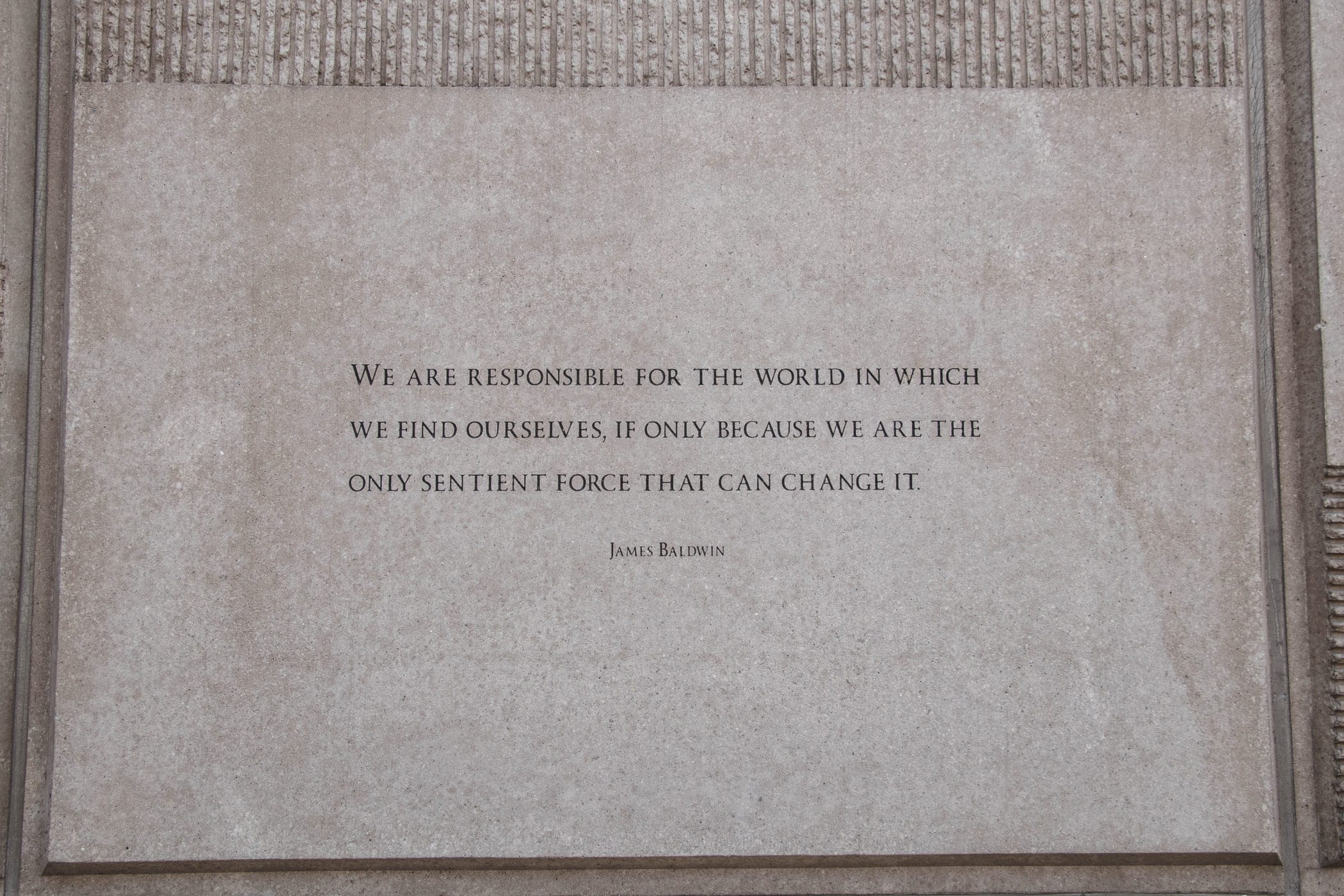
—Next Monday will mark the centenary of the lynching of three Black itinerant circus workers—Elias Clayton, Elmer Jackson, and Isaac McGhie—at the hands of a white mob in downtown Duluth, incensed by the spurious claims of their having mistreated a white couple. The photo image at the top of this post is of a portion of the memorial of this racist tragedy at the location where it occurred, at the intersection of East 1st St and North 2nd Ave. Michael Fedo's The Lynchings in Duluth tells the story without embellishment. 

—Back in December, 1862, the largest mass execution in the nation's history occurred in Mankato, when 38 Dakota Sioux were hanged en masse. The Native American tribe was frustrated with the US government's reneging on treaty promises, systematically destroying the habitat on which the tribe depended for food, and delaying annuity payments specified in treaties. Things came to a head in the summer of 1862, when, in desperation, the Dakota Sioux asked Andrew Myrick, the chief government trader for Minnesota to sell them food on credit. His response was said to be, So far as I am concerned, if they are hungry let them eat grass or their own dung. The Dakota Uprising ensued.

They killed settlers in the Minnesota River Valley, in a desperate attempt to drive them from the area. The US Army quickly quelled the violence, interning more than 1000 in the process—women, children, and elderly men in addition to warriors. A military tribunal sentenced 303 of the warriors to death. Though President Lincoln commuted the sentence of 265 at the last moment, the remaining 38 were executed. The following spring the remnants of the Dakota Sioux were summarily expelled from Minnesota.

All of which is to say, I need not stray far from home to find work. Racism is all around and deeply rooted. As cartoonist Walt Kelley had Pogo Possum say (in support of the first Earth Day) in 1970, pointing out succinctly who bears responsibility for worldwide pollution), We have met the enemy, and he is us. It is no less true of racism.

I will close with something inspirational and pithy from James Baldwin, chiseled into a panel of the Jackson, Clayton, McGhie memorial:

Tuesday, August 20, 2013

Not Losing the Race

In the past week I had an thoughtful email dialog with a woman I'd never met before who came across something I'd written for the Diversity issue (summer 2012) of Communities magazine. The article was about the dynamics of racism in groups and she was moved to share her thoughts. As the topic is important and her comments were insightful, I'm using our dialog as the substance of today's blog.

She wrote:
I was just reading your article online, The Paralysis of Racism in Social Change Groups. I thought it was a great article, showing much more awareness about the minority person's point of view than I see in general from non-minorities. I'm African-American.

I wanted to make a comment, because I had such a strong reaction when I read this part of your article:

• If possible, try to acknowledge that for the minority person the dynamic feels like racism—something they’ve undoubtedly become sensitized to. Even better, try to acknowledge how awful this must feel. Try to connect with them emotionally, even if you don’t think you’re doing that bad thing. Note: I’m not pretending this is easy (authentically acknowledging someone else’s hurt when you feel wrongly accused); yet this can be especially effective at diffusing tension if you can do it.
 

Speaking only for myself, trying to connect with me emotionally would not be especially effective at diffusing tension in me. It would make me angrier. In this context, trying to connect with me emotionally, or acknowledging that what's happening feels like racism to me, would feel like a condescending pat on the head. I would prefer just this approach that you suggested:

• If you can manage it without a charge (coming from a place of curiosity rather than defiance), ask the minority person why they thought that racism was occurring (essentially, “What indicates to you that you’re being responded to differently by virtue of race?”).

Then I could state my case, what I'm perceiving, and we could go from there.

I was on your page, because I'm in process of forming a small urban shared home in the coming year. I know that good communication processes are going to be critical in the success of the house, so I'm getting as much information as I can about communication processes in the context of intentional communities. I'm a communication coach myself, so I hope to be a positive force in fostering good communication in the group.


I replied:
I'm glad to hear you found my article constructive. To be clear, I'm not an expert of race. Rather I'm a group dynamics expert, and much of my work is about how to understand and bridge differences without running anyone over. Much of that work (which applies equally well to racism, I think) entails getting out of one's perspective and seeing the world through the eyes of the person with whom you disagree.
 

Let me lay out my thinking about why I advocate trying to connect emotionally and see how it works for you.

In working constructively with dynamics, it makes a big difference if nontrivial emotional distress is part of the picture. Sometimes it is; sometime it isn't. By "nontrivial" I mean that it's great enough that there's significant distortion going on. The point being that a person's ability to hear accurately what's being said is compromised by their distress. People vary a good deal with respect to how much distress pushes them over the line, but everyone has a line. It's neither a good thing or bad thing; it just is, and groups are well advised to learn how to understand and work with that moment.

Overwhelmingly, my experience has taught me that if someone is in significant distress, you must attend to that first before discussing content. In many cases simply acknowledging it is enough to deescalate the moment to where the remaining distortion is tolerable. In some cases though, it takes much more. While I've developed a protocol for working that moment (when acknowledgment is not enough), I'll leave that aside for now. The main point I'm trying to make is that attempting to bypass nontrivial distress does not work. To be sure, many groups nonetheless try to do that (mainly because they have no confidence in being able to navigate distress accurately or constructively), yet I have rarely seen this work well and leads to brittle agreements.

Having said all that, I get it that you believe not addressing the distress would work better for you. While I question whether that's really true (providing the distress is significant enough--and I imagine where you feel racism has entered the picture that the distress would probably be nontrivial), I wonder if your conclusion is based more on the ham-handed ways that people (whites?) have tried to reach out to you emotionally and your lack of personal experience with that working well, rather than on a preference for keeping emotional distance.

I fully acknowledge that forced or insincere attempts to reach you emotionally are not going to work well, and will probably escalate the tension. Further, it is not a simple skill to learn how to do well. Despite that, I advocate for this approach because it's worked so well for me in 25 years as a process consultant. In fact, I don't think it's possible to build vibrant communities without doing emotional work.


She continued with:
You're right about this:

"I wonder if your conclusion is based more on the ham-handed ways that people (whites?) have tried to reach out to you emotionally and your lack of personal experience with that working well, rather than on a preference for keeping emotional distance."

It seems to me the key element is trust. I would only be angry to begin with if I thought there could be racists in the group.

I'm sure trust is the issue, because recently, a good friend of mine (non-black) said something to me that was highly insensitive to blacks. On a scale of 1-10, it felt like a 9.95 to me (only because nothing is a perfect 10). It hurt me deeply, and I was upset about it for two weeks. It's had a lasting effect on me, but I know beyond a shadow of a doubt that my friend had zero intention of even bothering me. My friend was actually surprised that I was upset at all. This person may never "get it," and I'm okay with that reality, because I know this person well, and I know their intention is to be a kind and accepting person.

So, I agree that (if trust is there) it makes sense to deal with the emotions first.

Getting to the place of trust is the thing. I see how critical it is to choose members carefully and to establish these processes for handling emotions and decision-making.


I responded:
Trust is a chicken-and-egg dynamic. On the one hand you need trust to more readily see good intent and be less triggered. On the other, being seen accurately helps build trust. The heavy lifting here, in my view, is learning how to get good results (in this case, an authentic bridge to someone's emotional experience) when trust is damaged, or otherwise weak. Often, that's where skilled facilitation (or skilled group members who are sensitive to the need) can play a major role. It's damn hard to trust someone who has just done a grossly insensitive thing. Often, the exact same words—even said with the same tone and body language—will land differently if they come from someone other than the person who was the trigger.

I also want to make a comment about membership selection. While I am definitely supportive of being deliberate about it (especially with regard to social skills), no amount of screening will eliminate awkwardness or tension all together. Don't make the mistake of equating the volume of conflict with the health of the group. The test is not how much conflict you have, it's how you handle it.


She followed with: 
I'm not sure I agree with what you said about trust. I wouldn't trust someone just because they understand me and see my side clearly. They still may not have good intent. Any time I think I have good reason to believe a person doesn't have good intent, I will proceed with caution. If I have no specific reason to be cautious, if I'm neutral or I definitely trust them, then I'm quite open, as I am with you.

That would indeed be a heavy lift with me. If I think a person doesn't have good intentions toward me (regarding any type of issue), my emotional response to them isn't going to change unless that source of dishonorable intention is somehow removed. Maybe there's a misunderstanding on my part. Maybe they change their point of view—unless you're talking about learning to love someone who's working against you or who truly dislikes you. To me, that's a separate thing. Also, I could learn to work with anybody within a structure, like established rules in an intentional community, the same way I work at my job with someone I don't have a lot of rapport with (we just don't seem to like each other). 


I'd be able to cooperate with the person I'm upset with, but a facilitator or group member probably wouldn't be able to change my emotions.

Are you really talking about trying to alleviate my upset? To make me "not feel bad" about an upsetting incident? Maybe I'm unclear on the goal of the facilitation.


My reply:Often, though by no means always, bad intent is projected onto someone because that's the thing that allows you to make sense of what they've said or done. Overwhelmingly, my experience of working with groups in conflict has taught me that it's generally possible to uncover a plausible, innocent explanation (rather than that they're out to get you or believe you're inferior) if we take the time to unpack the dynamic and understand it from each player's perspective. (To be clear, I'm not saying the person did a smart thing; only that they didn't intend a mean thing.)

With that in mind, when I facilitate conflict I ask participants to suspend judgment to allow me the chance to explore perspective. If part of that exploration includes reaching out and holding each party accurately in both the their energy and their viewpoint, I can often get enough flexibility that people are willing to change their feelings and let go of the story that the other person acted from bad intent. This is huge.

To be clear, the facilitator only invites people to change their feelings (by which I mean anger toward the person, rather than upset with their action); there is no arm twisting. If it doesn't happen willingly, then it doesn't count. 

• • •
I just love it when people are curious about why things fall apart and what they can do to put Humpty Dumpty back together again—where no one has to be the bad guy or labeled an asshole. It gives me hope.

Thursday, November 10, 2011

The Paralysis of Racism in Social Change Groups

In the last week, I was twice in conversations—with two completely different groups, mind you—about how to navigate tense dynamics where a person with minority race bloodlines encountered resistance to what they were bringing to a predominantly white group, and immediately pulled the race card—charging that the group was responding prejudicially to that person because they weren't white. As both were explicitly committed to nondiscrimination, this development did not calm things down. The people I talked with were in anguish about how to proceed.

From the perspective of the minority person
In this dynamic, that person was simultaneously a minority by race (a constant) and a minority in what they are thinking or how they are behaving (which is specific to that moment). It's not necessarily clear why their idea is not met with enthusiasm.
How can that person discern if a particular moment of resistance is about racism, about an unpopular idea, about an uncomfortable behavior, or all of the above? This is not a simple analysis.

From the perspective of the white majority
Racism is a real and virulent disease. It's hard to know the full extent that it has infected a given culture (and hard to know when you're free of it). What's more, people in privilege are the least likely to be sensitive to the infection. Thus, even when you believe yourself to be consciously clean, there may still be residual doubt.

In the wider culture, we learn to fight (or manipulate) in order to get our way. One of the reasons people become bullies is because this strategy often works. That is, people will often back down rather than fight back. This is even more true in groups committed to cooperation, as it's especially odious to be in locked in a confrontational exchange—one of the very things you are trying to leave behind in choosing cooperation over competition. When you add white guilt into the mix, it's fairly easy to see how effective a charge of racism may be in stalling opposition amidst a group of whites. It's like shooting everyone with a taser.

As someone deeply experienced in having their viewpoints discounted or suppressed (racism is a real thing, folks), some minorities learn to do whatever it takes to that get their viewpoints more seriously considered in a majority context. In the context of resistance, they've learned to push harder. While they know they aren't "being nice"; they've learned that nice doesn't work. Nice can, in fact, be seen as one more form of white oppression (velvet handcuffs).

Given that minorities are used to whites being in denial about racism, resistance to charges of racism is often seen as prima facie evidence that the charge is true—even before anyone has examined the substance of the claim. It gets messy in a blink.

In both of the examples that were given to me (in each instance I was hearing the story from whites, not from a minority person), it appeared that there were ample ways to explain the resistance without relying on racism as an underlying factor. While that doesn't prove that racism wasn't present, neither was it obvious that it was. When my advice was asked about how to proceed, I had several things to offer about how whites might respond:

o If possible, try to acknowledge that for the minority person the dynamic feels like racism—something they've undoubtedly become sensitized to. Even better, try to acknowledge how awful this must feel. Try to connect with them emotionally, even if you don't think you're doing that bad thing. Note: I'm not pretending this is easy (authentically acknowledging someone else's hurt when you feel wrongly accused); yet this can be especially effective at diffusing tension if you can do it.

o If you can manage it without a charge (coming from a place of curiosity rather than defiance), ask the minority person why they thought that racism was occurring (essentially, "What indicates to you that you're being responded to differently by virtue of race?").

o Take time to look for defensiveness about the charge among the whites, and consider the ways in which that might legitimately be an element in the dynamic, even if you don't think it's the whole story.

o Don't be daunted by the racism claim from articulating what you don't like about what the minority person is saying or doing. It ultimately does no one any favors if you pull your punches and analyze statements or actions from minorities less carefully than you would the same things coming from whites (reverse discrimination).

o If things go productively, you can take this further by asking the minority person how whites can disagree with them without triggering claims of racism. You may or may not like the answer, but at least it will be an opening to a more nuanced choreography the next time you're all on the dance floor together.