Tuesday, July 28, 2020

Turnip Day and Bickled Peets

On the 25th of July
Sow your turnips, wet or dry

I imagine that for most folks, last Saturday slid by unnoticed. But for those of us who are grounded in in the arcane folklore of Missouri agriculture, it was Turnip Day—once brought briefly into the national spotlight by native son Harry Truman in 1948, when he called for a special summer session of Congress in an effort to light a fire under Republicans who controlled both chambers of Congress but produced little legislation.

Truman's call for a Turnip Day Session came July 15, at 1:45 am, in the context of giving his acceptance speech as the Democratic candidate for President. It was the start of his dramatic climb back into contention against the heavily favored Thomas Dewey, who he nipped at the wire in the November election. 

While Truman's gamble occurred 72 years ago, it occurred to me that here we are with Republicans diddling again, this time bumping along downstream without a rudder (Trump has plenty of rudeness, just no direction) in the fast water of a pandemic. It's incredible watching this train wreck unfold. Every single day, Trump loads up a shotgun… and discharges it into his foot by nightfall. (I appreciate that there were a lot of metaphors in that paragraph, but I imagine the meaning was clear nonetheless.)

While it's not obvious what we'll get with Biden, it's damn clear what we get with Trump and people are fed up and weary of the divisiveness, the venality, and the dysfunction. There's a bumpersticker on our block that encapsulates it all: "Any Functioning Adult in 2020."

• • •
Beyond politics and Show Me folklore, last weekend was notable because I was able to indulge in one of my favorites pastimes, condiment making. I lived for four decades at Sandhill Farm, where we had a foundational commitment to growing and preserving our own organic food. Over my years there I developed a niche for processing acidified foods (think tomatoes, fruits, and pickles), and I miss it today.

Happy as I am to be living in Duluth (as I type, it's 79 degrees with 44% humidity beneath a sky filled with cotton ball clouds—eat your heart out), I long for the rhythms of farm life. While Susan and I enjoy putzing around in our 100 sq ft backyard garden, I hit the jackpot last Friday when I was running Susan out to the car dealer's and we passed someone peddling fresh vegetables out the back of a pickup in a bank parking lot.

Thinking to pick up a half dozen ears of fresh corn (to accompany our grilled salmon fillet for dinner)
I pulled over on my way home and stumbled onto some nice wax beans and good looking beets. For reasons that escape me, it's hard finding beets at a decent price, so I knew a good deal when I found one, and I jumped on it, buying a half bushel. Sunday I turned those into 16 pints of pickled beets. Yeehah! (Susan made a double batch of moussaka earlier in the day, so our kitchen was redolent with the aromas of love.)

In addition to the odd experiment with a new recipe (last year it was chow chow pickle; this year I have a batch of red cabbage sauerkraut going), my baseline condiments (the things I never want to run out of) are: corn relish, dilly beans, pickled beets, and tomatillo salsa. Because we're just a household of two, and you can only expect your children to eat so much, I've disciplined myself to only making a batch of each of these every three years. Otherwise we'd need to devote an entire wall in the basement to canned goods storage.

Beets are an especially evocative food for me. In addition to something Susan and I both enjoy, it was one of my mother's favorites (though she only cooked them when Dad was on a business trip). When labeling the beets yesterday, I was reminded fondly of Ann Shrader, with whom I started Sandhill. (She and I share a son and a full deck of memories: 52 years worth.) Annie has a penchant for spoonerisms and enjoyed referring to what I had just created as "bickled peets," so that's what we'll call them here in Duluth. A new tradition.

Now if I can only find a bulk source of ripe tomatillos…

Wednesday, July 15, 2020

13 Angry Men

One of the silver linings about home quarantining is the opportunity to catch up on well-regarded films that I missed along the way. Last month I looked at a couple of 100 Best All-Time Movies lists (there are a gob of them—you know what they say, opinions are like bellybuttons: everybody has one), noting which I'd seen and which I'd missed.

Through the miracle of Netflix, I am simply working down the list and adding to my queue all the films I haven't seen (or didn't recall having seen, which amounts to the same thing). Last week I got a CD in the mail of the 1957 classic, Twelve Angry Men.

The entire movie is the jury room deliberation following a murder trial. The film opens with a bored judge giving instructions to the jury. The trial has ended and viewers have no idea what has occurred. A young man (early 20s?) is on trial and if the jury finds him guilty there is a mandatory death sentence. The decision must be unanimous. None of the jurors know each other ahead of time, or have any relationship to the defendant, the judge, or the lawyers.

The defendant is an immigrant and lives in low-cost tenement housing.

(The cast is terrific, including Henry Fonda, Lee J Cobb, E G Marshall, and Jack Klugman.)

This movie was released 63 years ago and times have changed—though not enough when it comes to prejudice and racism. The first thing that caught my attention is that all of the jurors are white and all of them are male. 

We are told that the defendant was represented by a court-appointed attorney who was less than zealous in his efforts to protect his client's rights, which illuminates the issue of how much justice is available to folks who cannot afford high-priced legal help. In the movie, the character played by Henry Fonda takes up asking the questions that the defense lawyer never did—not because he's convinced of the defendant's innocence, but because he's not convinced of his guilt. Slowly, over the course of several hours, he's able to cast enough doubt on the veracity of eyewitness testimony and how to interpret the "facts," that the jury swings all the way from 11 siding with the prosecution to a unanimous decision to acquit. It's fascinating to watch the progression.

What stood out most for me about Fonda's character was his ability to withstand a steady diet of pressure from others ("we could have gone home two hours ago if you'd voted guilty at the outset") without losing his core concern for "reasonable doubt," and his steadfast ability to resist responding in kind when being railed at by others. It was rare courage.

• One juror is impatient to reach a guilty verdict so as not to miss a baseball game that he has tickets to that evening. 

• Another juror is afraid of the responsibility. He frequently makes jokes in an awkward attempt to lighten the mood, and simply votes with the majority.

• The oldest member of the jury offers important insight into why the retired man who claimed to have seen the murder might have made up his testimony—for a final chance to be taken seriously in a culture that warehouses its seniors, and pushes them to the side.

• The juror portrayed by E G Marshall is a paragon of rationality who is invariably contained and grim. He insists that the defendant must be found guilty because a woman testified that she saw him commit the murder from the window of her bedroom 60 feet away—until it's pointed out that she wears glasses and claimed to have seen the murder after being awakened from a sound sleep. As the juror also wears glasses, he realizes the improbability of the woman having her glasses on for her observation, and he changes his vote to not guilty.

• The juror played by Lee J Cobb is the last holdout, until he admits that his upset with the defendant is a misplaced projection of his estranged relationship with his son—who is the same age as the defendant. Breaking down in tears, he agrees to acquit.

• The juror who serves as foreman is constantly trying to figure out how the group wants to proceed (should we talk or vote; should votes by open or secret ballot?) and is regularly disrespected by the others. (When process is unclear it can be a thankless job to be responsible for it.)


The movie is full of racist innuendo (everybody knows that dirty immigrants can't be trusted), and mass confusion about what to do with strong feelings, which, not surprisingly, abound in a murder trial.

On the one hand, it's inspiring to realize how far we've come since 1957. There would certainly be women on the jury today, and (hopefully) a racial and ethnic mix as well. Yet it's also sobering to see how little we've advanced when it comes to clear communication, and how much the defendant's fate depended on that chance that someone as skilled and resolute as Henry Fonda's character was on the jury.

In general, I strongly question whether people of color are receiving any more justice today than they were 63 years ago, and that realization effectively makes me the 13th angry man.

Tuesday, June 23, 2020

The Calculus of Suicide

This past week an older friend of mine (let's call her Adrian) reached me by phone when she was in a depressed mood. Her life wasn't working well (and hadn't been for quite a while). Near tears she asked me for a date to help her walk through whether or not to commit suicide. Oh boy. I agreed to be there for her (how would it have landed if I'd turned her down?), yet I was shaken and unsure how to proceed.

My emotions and thoughts were all over the place:

—I was sad that Adrian has had such an unhappy life.

—I was immediately touched by a sense of loss (pre-grieving?). I didn't want to lose my friend.

—I felt guilty that I hadn't initiated more contact with her the last few months.

—I was flattered that Adrian felt I could handle such a sensitive and weighty assignment. She knew I didn't have a moral judgment about suicide, and she knew that I wouldn't freak out. She knew I'd take her seriously and help her explore her options dispassionately (isn't that what good friends do?).

—I was intrigued. It's a powerful topic, though one I'd never focused on before, beyond the moral and existential questions. How would one make this decision? It turns out I have a number of thoughts about it, and I was glad to have time to prepare.

—In addition to all of the above, Adrian's situation offers an insight into what it's like to be on the gray side of 70 in these days of Covid. For anyone in that age range, there are much higher odds that you'll die from a Covid infection than for younger population segments—the death rate is 8% for those in their 70s; 14% for those 80+; and only 0.4% for those under 50. Of course, those are just averages. If you're immunocompromised (as Adrian and I are) the odds are significantly worse.

[Digesting these statistics helps explain some of the tension we're witnessing between younger people who are impatient to resume normal life and seniors who are more cautious—those two age brackets are looking at different odds. What fascinates me the most is the fierce determination among some in the lower-risk age range who insist on their right to decide for themselves how safe it will be for others. I don't have any problem with individuals making choices for themselves, but that's not the world we live in—especially when a quarter or more of those infected with Covid are asymptomatic.

When people defy the advice of health care professionals by not wearing masks or maintaining social distancing, they are essentially saying that they get to be the sole arbiters of what's acceptable risk for everyone around them. In consequence, those who feel that more cautious public behavior is called for need to be mindful of the presence of those who don't care to take their concerns into account.

Thus people who believe themselves to be at risk need to be extra cautious about being out in public, because they cannot rely on others being mindful of their situation. How did we get to be so uncaring?]

In any event, Adrian and I are both in the better-wait-for-a-vaccine-before-going-to-a-restaurant category, which reinforces isolation for our age cohort—and this is on top of the struggles that seniors ordinarily experience trying get enough human contact to sustain health. Our culture is youth oriented and we tend to warehouse or otherwise set aside our seniors—not because we no longer care about them or they can no longer contribute, but because younger folks don't want to be burdened by elder care, are impatient for their time in the sun, and prefer to learn through doing it themselves than by being mentored. When you add into the mix the mobility of contemporary society, to the point where adult children often live at some distance from their parents, it's tough on seniors.

All of which is to say it can be lonely growing old, especially for those without a partner, and the pandemic has made it worse. Susan and I are highly fortunate to have each other, as well as the surrounding neighborhood, where Susan has gradually built a wealth of caring relationships over the course of four decades. We are not at all as isolated as Adrian.

Our next door neighbor—in her 80s—had been living alone for some time and recently fell and broke her hip. On top of that she has been suffering memory loss (onset dementia?), and her four adult children collectively decided that it's time for mom to move to an assisted living facility. On the one hand this makes total sense. On the other, it's hard on our neighbor to make the adjustment, losing the anchoring familiarity of her home of 50 years. It's a sad time.

Although Adrian has retained her independent living, she is in a housing complex of 400 where no one really knows her. While everyone needs caring relationships in their life, not everyone has it. And that's brutal.

Against this backdrop, I want to share my thinking about Adrian's choice about whether to stay or go. First I turned my attention to what I know about her situation:

Factors
• She has been in poor health for many years.
• Adrian has weight and mobility issues which make it hard for her to get around (even if it were safe to do so).
• She lives in a large housing complex in an urban setting and has no friends in that location. 
• She has a car and still drives (though she's nervous about going out because of the pandemic).
• She can hire support for cleaning and shopping, but it doesn't provide companionship.
• It's been hard for her to avoid feeling overwhelmed by the chaos and disorganization in her life, and then she falls into a pattern of self-deprecation at the end of the day if she hasn't accomplished much. She finds it difficult to make a plan and to stick to it.
• One of the most depressing things for Adrian is that she doesn't feel that she's being much use to anyone these days—there is no demand for what she has to offer.
• She has one sibling, with whom she has a complicated relationship. Her sister lives in a different time zone and doesn't provide much emotional support. She has no other living family—though she does have a wealth of friends sprinkled across the continent.
• Because she has an extensive background in community living, the lack of social contact in her life today is all the more glaring.
• Electronic connections are helpful (phone, email, social media), but are not the same as being in the same room.

Next I elucidated the questions I would use to explore the possibilities.

Questions
1. How do you assess the balance of joy and satisfaction relative to pain and misery in your life right now? (While I can't imagine this will look good—else why be thinking about suicide—how bad is it? Let's lay it out.)

2. What are your prospects for turning this around? Can you reasonably expect things to get better? Are there things you can do that will make a difference? What help do you need, if any, to move things in a positive direction? Be specific. 

3. Is there work (or projects) that would inspire you to stay alive to do?

4. Is there a role for me to play in reinforcing the positive answers to the prior two questions?

5. If you decide in favor of suicide, walk me through how you'd do it. Do you have the will to carry this out?

6. If you decide on suicide, what do you need to complete or get in order first (for example, are there estate decisions to make)? Walk me through the timeline. Is there a role I can play in this?

7. Who do you want to say goodbye to?

• • •
While I was expecting to get into these questions over the weekend, it didn't happen. Adrian was in a better mood when we talked (for about an hour) and my instinct was to let her direct the flow of what we talked about. In turned out that she had stepped back from the brink, at least for now. 

Meanwhile, I am mindful that I can support my friend (and contradict the story that no one cares) by the simple act of initiating phone calls once every fortnight or so. And if the impetus to discuss suicide surfaces again, I'll be ready. 

Friday, June 12, 2020

Racism and the Road Ahead


When asked by a foreign journalist about the Negro problem in America, author James Baldwin replied—in the '60s mind you, more than 50 years ago—"We don't have a Negro problem in America. We have a white problem."
• • •
Racism Rises to the Top
Racism is on my mind a lot these days. It's been the first thing to come along in months that's knocked the pandemic off the front page—of both the media and my consciousness.

Two weeks ago, George Floyd was murdered by a white Minneapolis police officer who had a knee on his neck for over eight minutes while George was handcuffed and prone on the ground. The incident happened in broad daylight and was captured on video camera by onlookers who were horrified at what was happening. There were three other police officers present and none tried to intervene as George begged for his life and stopped breathing. George had been detained as a suspect in passing a counterfeit $20 bill. He was unarmed and did not resist arrest.

Ahmaud Arbery, a 25-year old unarmed Black man was killed Feb 23 while jogging in daylight hours in a residential neighborhood (part of his usual running route) in suburban Brunswick GA. The shooters and pickup owners were Gregory McMichael (64) and his son Travis (34). Although the incident was caught in video camera, the McMichaels were not arrested until May 7—a shocking 74 days after the killing.

Last Friday would have been the 27th birthday of Breonna Taylor, a Black emergency medical technician, but she was shot to death March 13 by Louisville police officers executing a no-knock warrant, searching for a suspect in a pre-dawn drug raid gone bad. She was asleep in her bed at the time, and was shot eight times. Police were looking for a suspect already in custody

Amy Cooper, a 41-year-old white woman, made up a story when phoning police about a 47-year-old Black man (Christian Cooper, no relation) attacking her and threatening her life when all he had done was asked her to leash her dog in Central Park May 25—the same day George Floyd was choked out in South Minneapolis. While the preposterousness of the woman's claim was exposed immediately, it's outrageous that she thought she could get away with it.
• • •
The Institutional Dimension
As awful as these incidents are, the greater horror is that it is only a sampling of the latest in a very long line of violence and injustice of whites towards people of color—in this country that proclaims itself the land of the free, without any apparent sense of irony.

How far does this go back? All the way. The original US Constitution (1787) specified that only white men who owned property had the right to vote. Despite incremental changes over the years that have extended the vote to all US citizens (notably the Emancipation Proclamation of 1963; the 14th and 15th amendments to the Constitution following the Civil War; the 19th amendment guaranteeing women's suffrage in 1920; and the Voting Rights Act of 1965), racism is bred in the bone, and is so ingrained in American culture that it goes largely unnoticed by whites—the segment of the population for whom the deck is stacked. (In fact, this pernicious injustice exists everywhere on earth that whites have settled, though I will focus here only on US culture, the one I know best.)

It is directly related to why people of color are more apt to get infected by the coronavirus and to die from it. People of color are less likely to get hired for good jobs, they get paid less for doing the same work, they are more likely to get fired in hard times, they have less access to good schools, they have less access to entrepreneurial capital, and they are subject to being more targeted by police whenever they go out. All of this adds up to more stress and less income, which translates into poorer health, reducing the likelihood of their surviving being infected by Covid-19. It's a vicious circle.

While George Floyd's killing was no more heinous or inexcusable than many other atrocities of whites toward people of color, it has turned out to be a flashpoint with respect to racism. Eighteen days later, the protests have become international and are gaining momentum even as I type. Importantly, the concept of systemic racism is now on the table—that thing that James Baldwin was speaking of in my opening quote. It's about time.

On the one hand, it’s gut wrenching to have this shoved in our face. On the other, maybe—just maybe—it will wake whites to our need to insist that institutional racism be dismantled. On the hopeful side, there has never been as much white attention to this issue as there is now, and it will absolutely take a major shift in white consciousness to address this in a serious way. People have to demand it. In that way, the protests are wonderful, and it’s heartening to see how widespread they are.

On the cynical side, why will it be different this time? Can we trust the political process to do the work? Politicians are too focused on getting elected and have the attention span of a sunfish. In all of the ways that President Trump has disgusted me—and there are many—his current emphasis on law and order completely misses the mark and repulses me the most. Fortunately, even the lock-step Republicans are starting to push back on his misplaced focus on a military response to suppress looting and burning. While real things, they are a distraction from the main issue. 

Biden is saying the right things, yet what will he actually do? If he gets it, why wasn’t he more active in this arena as VP for eight years under Obama? Police violence is a symptom and there is work to do there, but that’s derivative from whites who have been stubbornly comfortable with their privilege and oblivious to looking at it. 

We need a sea change. Time will tell whether we get one, or just another high tide of outrage.
• • •
My Journey
There is a lot of work to do, some of which needs to be done by me. As I've come to a growing realization of the dimensions of racism, a large question looms over me: what should I be doing (that I have not been doing already) as someone who wants to be part of the solution? 

I'm in anguish over this. My life has been bathed in privilege all along and it has taken me my entire 70 years to get to the degree of awareness that I've now achieved—which is only a point on a journey; I don't expect to ever complete the peeling of this onion. While I'm not particularly proud of that pace, here I am.

So this is a status report on what's bubbled up for me this last month. Disclaimer: my journey is just that—my journey. Writing about it helps clarify my learnings and the road ahead. If it's inspirational for my readers, that's great, but it's wholly up to each of you to make your own assessments and to make your own decisions. I do not presume that my path should be yours.

—The first step I took was to accept an invitation in early May from my good friend María Silvia to participate in a white racism study group—12-15 of us meet (via Zoom) for an hour weekly to wrestle with this issue, using Robin Diangelo's White Fragility as an inspirational point of departure. It helps to explore this compelling, yet tender topic with fellow travelers. We stumble along together.

—I've committed to educating myself about the dimensions of the problem (see more on this below).

—I am trying to learn to see what I've been conditioned to not notice. The trick here, of course, is that you never know when you're done. Maybe you never are.

—Can I commit to objecting to microaggressions as I encounter them? There is definitely the need, yet I am constantly wrestling with finding a way to do so that has a chance of being constructive. I am frequently up against defensiveness and denial, but maybe I should speak up anyway. This is hard. The divisiveness in the current political climate makes me sick and I desperately don't want to be fomenting confrontation. Yet I also don't want to be ducking the work, and complicit in the continuation of white racism. Argh!
• • •
The Minnesota Story (not so nice)
Minnesotans pride themselves on being civil (Minnesota nice) and generally progressive. As a citizen here since 2016 I figured I should familiarize myself with my adopted state's history with racism. Unfortunately, it's embarrassing. While we like to brand ourselves as the bastion of forward thinking in the Midwest, our history with respect to racism tells a different story. Let me lay out three atrocities that frame the picture:

—As noted above George Floyd was murdered by members of the Minneapolis police force, in a blatant display of unnecessary force by a white officer. Worse, this is not an isolated example. There have been unaddressed complaints about the Minneapolis police for years.

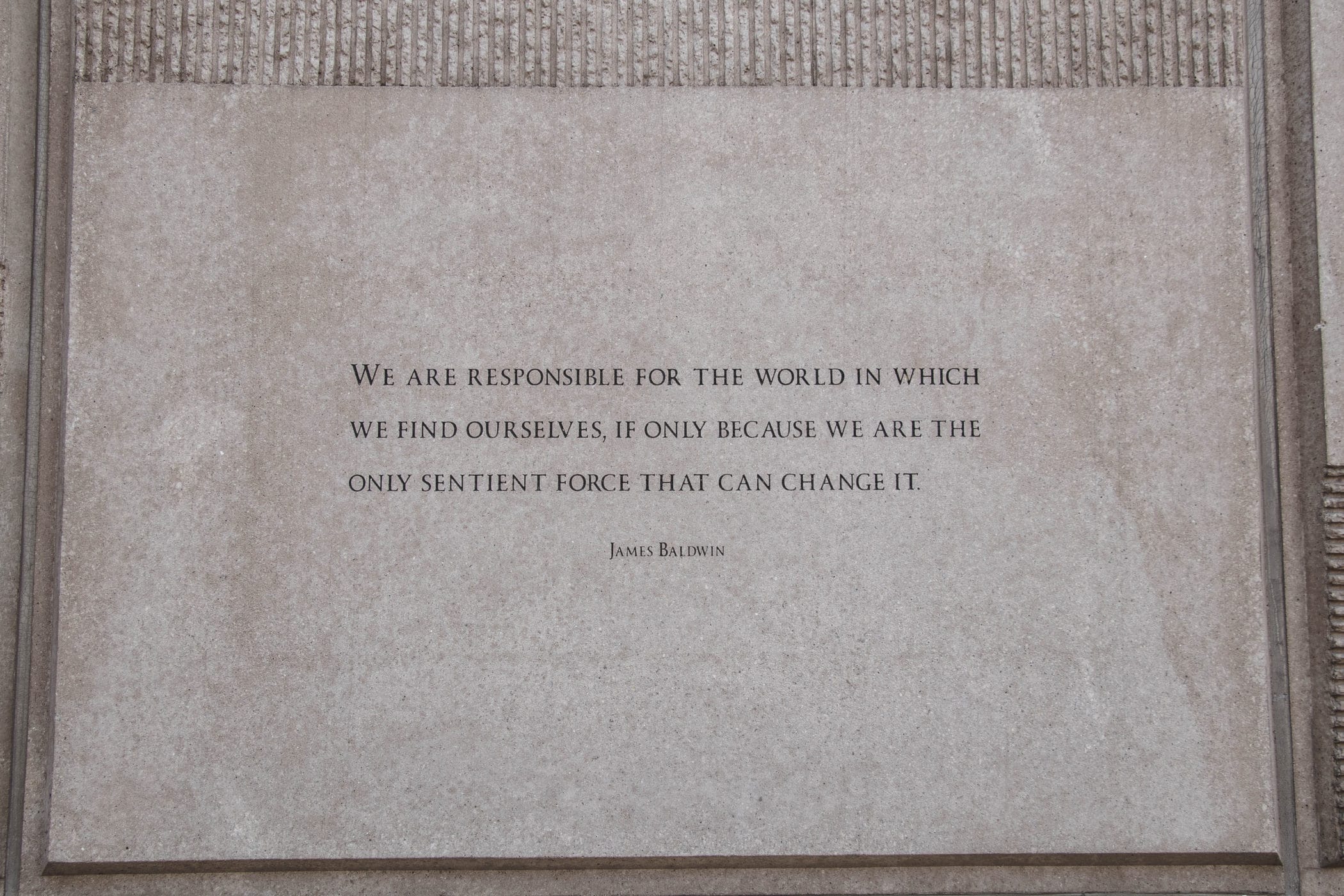
—Next Monday will mark the centenary of the lynching of three Black itinerant circus workers—Elias Clayton, Elmer Jackson, and Isaac McGhie—at the hands of a white mob in downtown Duluth, incensed by the spurious claims of their having mistreated a white couple. The photo image at the top of this post is of a portion of the memorial of this racist tragedy at the location where it occurred, at the intersection of East 1st St and North 2nd Ave. Michael Fedo's The Lynchings in Duluth tells the story without embellishment. 

—Back in December, 1862, the largest mass execution in the nation's history occurred in Mankato, when 38 Dakota Sioux were hanged en masse. The Native American tribe was frustrated with the US government's reneging on treaty promises, systematically destroying the habitat on which the tribe depended for food, and delaying annuity payments specified in treaties. Things came to a head in the summer of 1862, when, in desperation, the Dakota Sioux asked Andrew Myrick, the chief government trader for Minnesota to sell them food on credit. His response was said to be, So far as I am concerned, if they are hungry let them eat grass or their own dung. The Dakota Uprising ensued.

They killed settlers in the Minnesota River Valley, in a desperate attempt to drive them from the area. The US Army quickly quelled the violence, interning more than 1000 in the process—women, children, and elderly men in addition to warriors. A military tribunal sentenced 303 of the warriors to death. Though President Lincoln commuted the sentence of 265 at the last moment, the remaining 38 were executed. The following spring the remnants of the Dakota Sioux were summarily expelled from Minnesota.

All of which is to say, I need not stray far from home to find work. Racism is all around and deeply rooted. As cartoonist Walt Kelley had Pogo Possum say (in support of the first Earth Day) in 1970, pointing out succinctly who bears responsibility for worldwide pollution), We have met the enemy, and he is us. It is no less true of racism.

I will close with something inspirational and pithy from James Baldwin, chiseled into a panel of the Jackson, Clayton, McGhie memorial:

Wednesday, May 27, 2020

Key Facilitative Skills: Becoming Multi-tongued

As a professional facilitator for more than three decades, I've had ample opportunity to observe which skills make the most difference. As a facilitation trainer the past 15 years, I've collected plenty of data about which lessons have been the most challenging for students to digest. Taken all together, I've decided to assemble a series of blog posts on the facilitation skills I consider to be both the hardest to master and the most potent for producing productive meetings. They will all bear the header Key Facilitation Skills and it's a distillation of where I believe the heavy lifting is done.

Here are the headlines of what I'll cover in this series:


I. Riding Two Horses: Content and Energy
II. Working Constructively with Emotions 
III. Managing the Obstreperous
IV. Developing Range: Holding the Reins Only as Tightly as the Horses Require
V. Semipermeable Membranes: Welcoming Passion While Limiting Aggression
VI. Creating Durable Containers for Hard Conversations
VII. Walking the Feedback Talk
VIII. Sis Boom Bang
IX. Projecting Curiosity in the Presence of Disagreement
X. Distinguishing Weird (But Benign) from Seductive (Yet Dangerous)
XI. Eliciting Proposals that Sing
XII. Becoming Multi-tongued
XIII. Not Leaving Product on the Table
XIV. Sequencing Issues Productively
XV. Trusting the Force   
• • •
XII. Becoming Multi-tongued
I've been a process consultant and teacher since 1987. In all that time every meeting I've attended, observed, or facilitated has been conducted in English—my native tongue. By degrees though, I've discovered that that's not the only language being spoken.

There is also the language of process, body language, and the lingua franca of emotions. If you aspire to become a skilled facilitator it behooves you to develop a facility with all four.

1. English
Leaving aside the challenge of learning English as a second language (which is a torture I've never been subjected to), the challenge here is much more than mastering parts of speech, vocabulary, and diction. There are, for example, the nuances of regional dialects. And all of these aspects enjoy a longer half-life than the evanescent meanings of metaphors, colloquialisms, idioms, and humor. What you learned as au courant a decade ago may now be passé. It is, as they say, complicated.

New words (or meanings) are constantly being forged in the ever-changing crucible of contemporary discourse. So you have to pay attention, or you'll never be woke to all that people are saying.

And that's just the easy part.

2. Process Language
In cooperative culture the how matters as much as the what. The promise of cooperative culture is that decisions will be made collectively—rather than by the strong, the quick, the rich, the loud, the privileged, or the clever. Doing that well means creating and sustaining openings for the input of all interested parties to be heard and taken into account. When you factor in the wide variance that exists among people's articulateness (see the prior point) and their relative comfort speaking in front of a group, quite a bit of care needs to be taken to insure a reasonably equal opportunity for all.

It is no small matter learning how to read what someone needs as an accessible onramp to the conversation; what acknowledgment someone needs to feel heard; how to offer a variety of ways to engage on a topic such that everyone has at least one format that works for them; how to bridge between people who are not hearing each other; how to accurately and concisely summarize disparate input. Skilled facilitators need to be able to do all of these things.

3. Body Language
Words, tone, volume, and pace are all part of how we communicate, yet we also covey meaning without sound—in the way we hold our bodies, facial expressions, and hand gestures. While much of this happens without conscious focus, it is this element that is greatly compromised in making the switch to Zoom when everyone cannot be in the same room (for reasons of expense, time, or pandemic). Most of us rely heavily on body language to corroborate the meaning we extract from words. 

When we're missing body language—say, with email—there is considerable risk of misinterpreting intent and meaning. Confusion that might have been cleared up in a matter of seconds if you had sight lines to a speaker can persist for weeks when all you have are the words to go by. When we lack information in an exchange, most of us tend to fill in the blanks with guesses and projections, rather than ask for clarification. When you indulge in that, all manner of mischief can ensue. Thus, Zoom (video-conferencing) helps because it supplies tone, volume, pace, and facial expressions of the speaker, which substantially cuts down on the misinterpretation that email is vulnerable to. You just have to be careful to remember that you are generally not able to get a clear read of the body language of the listeners, and you may be missing important clues about how the speaker's offering is landing.

Aside: because reading non-verbal cues is important, it's generally a poor idea for facilitators to self-scribe (in those times when it's deemed valuable to record what's happening on flip chart paper or a white board). You have to have your eyes on the group, not just your ears.

4. Emotional Language
In my experience, most cooperative groups do not have any agreements about how they'll work with emotional input. Not because members don't have feelings, or don't bring them into the room during meetings—but because welcoming feelings, especially strong ones, tends to be scary and chaotic. Lacking agreements about how to work with feelings there is marked tendency for groups to try to put a lid on them as soon as they arise. Most of us only have bad experiences when strong feelings are expressed (people are attacked or things are said in the heat of the moment that are later regretted), and have learned to be afraid of the damage to relationship that can occur.

Central to what I believe is a more productive approach is to have facilitators develop the ability to work deftly with emotions and to be able to harness feelings as a source of information and energy. I am suggesting that you'll be better off if you can view strong feelings as an indication that something important is happening, rather than as a sign of something dangerous happening. I understand that for many this may require undoing a considerable amount of conditioning, but it's worth it.
• • •
Of course, some of these languages overlap (for example, conveying emotional pain through tone and facial expressions as well as words), yet I've separated them out in this monograph to make clear that they are distinctive forms of communication and that skilled facilitators should strive to become fluent in all four, as well as the ability to translate from one to another. Think of it as fourplay.

Friday, May 15, 2020

Laird on Tap

Welcome to my world of virtual consulting.

Now that I've had a chance to get into the rhythm of home quarantining, and to digest the reality that travel is a distant dream (as an at-risk senior it's not prudent for me to venture away from home sooner than there's a reliable COVID vaccine available), I've been putting serious thought into what I can deliver at a distance.

Here's what I've come up with so far:

I. Conferences
As gathering folks together in numbers for multiple days is especially contraindicated right now, community networks are scrambling to develop ways to deliver useful product safely. Understandably, everyone is thinking webinars, and I'm currently in dialog with three networks about being on their menus:

1. Foundation for Intentional Community
Elders and Intentional Community • May 27 • 4-6 pm (Eastern)

I'll be doing a 15-minute presentation at the front end of this, laying out the pros and cons of choosing a senior-oriented community (where everyone is 50+) or an intergenerational community. It's a more complicated choice than you might imagine.

2. Coho/US
The Heart of Community • May 30 • 12-6 pm (Eastern)

I'll be doing a one-hour presentation (2-3 pm) on Consensus Challenges—the places where groups tend to get stuck. For populations steeped in competitive culture (which is just about everyone), the transition to cooperative culture tends to be predictably bumpy. I'll lay out the roadblocks and potholes on the road to utopia… and what you can do about them.

3. Canadian Cohousing Network
TBA

This burgeoning network is mulling over what to offer and when. I've given them a host of possibilities but I don't know yet what will be selected. Visit the Canadian Cohousing Network website for updates.

II. Facilitation
I sat in, from home, as an observer on a cohousing community's two-hour Zoom plenary last weekend, affording me an initial taste of what this might be like, and I was buoyed to discover that I could accurately read the undercurrents of a complicated conversation without any visual clues about how the speaker was landing with the audience. 

This is an affirmation, I believe, of how I can bring my decades of experience into play. Having "been there before" I was able to recognize what was happening even without a full range of input. While it's still better having everyone in the same room, it doesn't mean that important work must be postponed until that can happen.

Thus, I'm now willing to offer my services as an outside facilitator—literally outside—maybe not in the same time zone. However, that's only one side of the equation. Now we'll see what demand exists for disembodied facilitators. (I know there is need, but that's not the same as demand.)

III. Training
Since 2003 I have been delivering a two-year facilitation training program where a group of students (typically 10-12, but occasionally more) concentrated in a geographical area gather eight times for intensive three-day weekends, spaced approximately three months apart. I have delivered this program a dozen times in its entirety, with an additional two programs currently underway. 

Understandably, the pandemic has interrupted the current programs and I am in the process of figuring out how to continue the work without gathering in the same room. (Who's zooming who?) I'll be experimenting with this in both training groups in the coming weeks and I'm excited by the challenge—there are even advantages to changing up the formats and doing things differently. I like to think of the training programs as teaching improv, where the trainers adapt to what's happening. In that context, this is just another opportunity, both for the students and the instructors.

IV. Mentoring
Although this has never been a large part of my portfolio, it's been a steady one and something I've been doing for more than 10 years—almost all of which happens via phone or email, augmented in recently by teleconferencing, such a Google Chat or Zoom. Although this is not a service I have particularly marketed, it is highly personal and usually quite enjoyable. I'd be happy to do more of it if there was interest and the fit seemed right.

If this possibility appeals to you, send me a note.

Together, we'll figure this out.

Friday, May 8, 2020

The Doctor Is In (Virtually)

For the second time in five years, my world has been turned upside down.

This time though, I have a lot of company.

During the stretch February 2015-January 2016 I went through a 12-month period in which I lost my marriage, my community, and my health. It was a rough year. When I recovered from that triple whammy, I was in a new relationship and living in a new state (Minnesota, not the state of confusion). After a long pause to cope with debilitation associated with the discovery of my having multiple myeloma, and getting it under control, I was able to resurrect my career as a group process consultant and facilitation trainer—to the point where I was sailing along much as I had pre-2015.

Apparently though, that was too easy. So the Magic 8-ball of my fate was shaken once again, this time returning the enigmatic "Try again later." As it has for many, the emergence of the novel coronavirus has introduced major uncertainty into what the next couple of years will look like.

My work with cooperative groups (whether as an outside facilitator helping a community negotiate a patch of heavy sledding, or as a facilitation trainer) is predicated on being able to accurately read and work with the energy in the room. It's not just paying attention to what people are thinking and saying, it's also about whether relationships and group cohesion are being enhanced or degraded. As a good deal of energy work is nonverbal, the overwhelming bulk of my work is done on site—where I travel to the group and everyone is in the same room.

For the first time in my career, however, that's not an option. And it's not clear when it will be again. My odometer rolled past 70 last fall and I'm immunosuppressed (by virtue of my cancer and its treatment). My oncologist has made it clear that when pandemic officials discuss people in high-risk categories, they're talking about me. As it's a very bad idea for me to contract COVID-19, I probably won't be traveling much until and unless there's a vaccine or herd immunity to protect me—both of which could take a while. (I had my cyclical 28-day visit with my oncologist yesterday and he confirmed my thinking on this.)

So… it's time to reinvent myself (again). Never mind that I'd prefer to deliver my services in person, what can I do when that's not on the table? We're about to find out. The need for assistance didn't dry up with the pandemic; just the ability to respond in the same room.

Of particular interest is how to facilitate emotionally volatile dynamics with a dearth of nonverbal clues. It's hard enough when all the clues are available.

In the last two weeks I've participated in Zoom calls with the students in both of my facilitation training classes (one on southern BC and one in central NC) and fielded inquiries from five groups around the continent: one each in British Columbia, California, Maryland, Michigan, and Virginia. And the beat goes on.

If you have concerns about group dynamics where you or friends think my experience with cooperative groups can help, the doctor is in. Instead of a daily rate, I'll now be thinking in terms of an hourly charge—dispensing group process advice and instruction by the tenths of an hour. We'll see what happens.